
12 Best Glean Alternatives for Private Enterprise AI Search (2026)
Compare 12 Glean alternatives for enterprise AI search. Covers Onyx, Guru, Microsoft Copilot, self-hosted options with transparent pricing and privacy controls.
Glean raised $150M at a $7.2 billion valuation in June 2025.
That valuation reflects the problem they solve: enterprise knowledge is scattered across 50+ SaaS tools, and employees waste hours finding what they need. But the valuation also reflects their pricing.
Industry estimates put Glean at $50+ per user monthly with a $50,000-$60,000 minimum annual contract. That requires 100+ users just to get started. No free tier. No self-service trial. A paid proof-of-concept can run $70,000.
For enterprises that want internal knowledge AI without the opacity and cost, these 12 alternatives offer different tradeoffs: open-source self-hosting, transparent pricing, faster deployment, or specialized capabilities.
Why Teams Look for Glean Alternatives
Three patterns drive the search:
Cost and pricing transparency. Glean's enterprise sales model means no public pricing, minimum contract thresholds, and 10% mandatory support fees. Renewal price increases of 7-12% are common. Smaller organizations and budget-conscious teams hit walls immediately.
Deployment and data control. Glean indexes your data into their infrastructure. For regulated industries or privacy-conscious organizations, that creates compliance scope expansion. Self-hosted alternatives keep data in your environment.
Setup complexity. Gartner reviews mention "tricky setup" and implementation timelines that drag on. Some alternatives deploy in 30 minutes instead of months.
The alternatives below address these concerns differently. Some trade features for simplicity. Others trade managed services for control. Pick based on your constraints.
Quick Comparison
| Platform | Type | Self-Hosted | Pricing Model | Best For |
|---|---|---|---|---|
| Onyx (Danswer) | Open-source | Yes | Free / $16/user | Privacy-first teams |
| Prem AI | Managed platform | Yes | Usage-based | Fine-tuning + compliance |
| Guru | Knowledge wiki | No | $15/user | Verified knowledge |
| Microsoft Copilot | Ecosystem native | No | $30/user add-on | Microsoft 365 shops |
| GoSearch | Enterprise search | Yes | Freemium | Transparent pricing |
| Notion AI | Workspace native | No | $10/user add-on | Notion-first teams |
| Slack AI | Ecosystem native | No | Bundled | Slack-heavy orgs |
| Elastic Enterprise | Search engine | Yes | Custom | Technical teams |
| Coveo | E-commerce/support | Hybrid | Custom | Customer-facing search |
| Algolia | Search API | Cloud | $1.50/1K requests | Developer-driven |
| ChatGPT Enterprise | AI assistant | No | Custom | General AI + connectors |
| Dust | AI agents | No | Usage-based | Workflow automation |
1. Onyx (formerly Danswer)
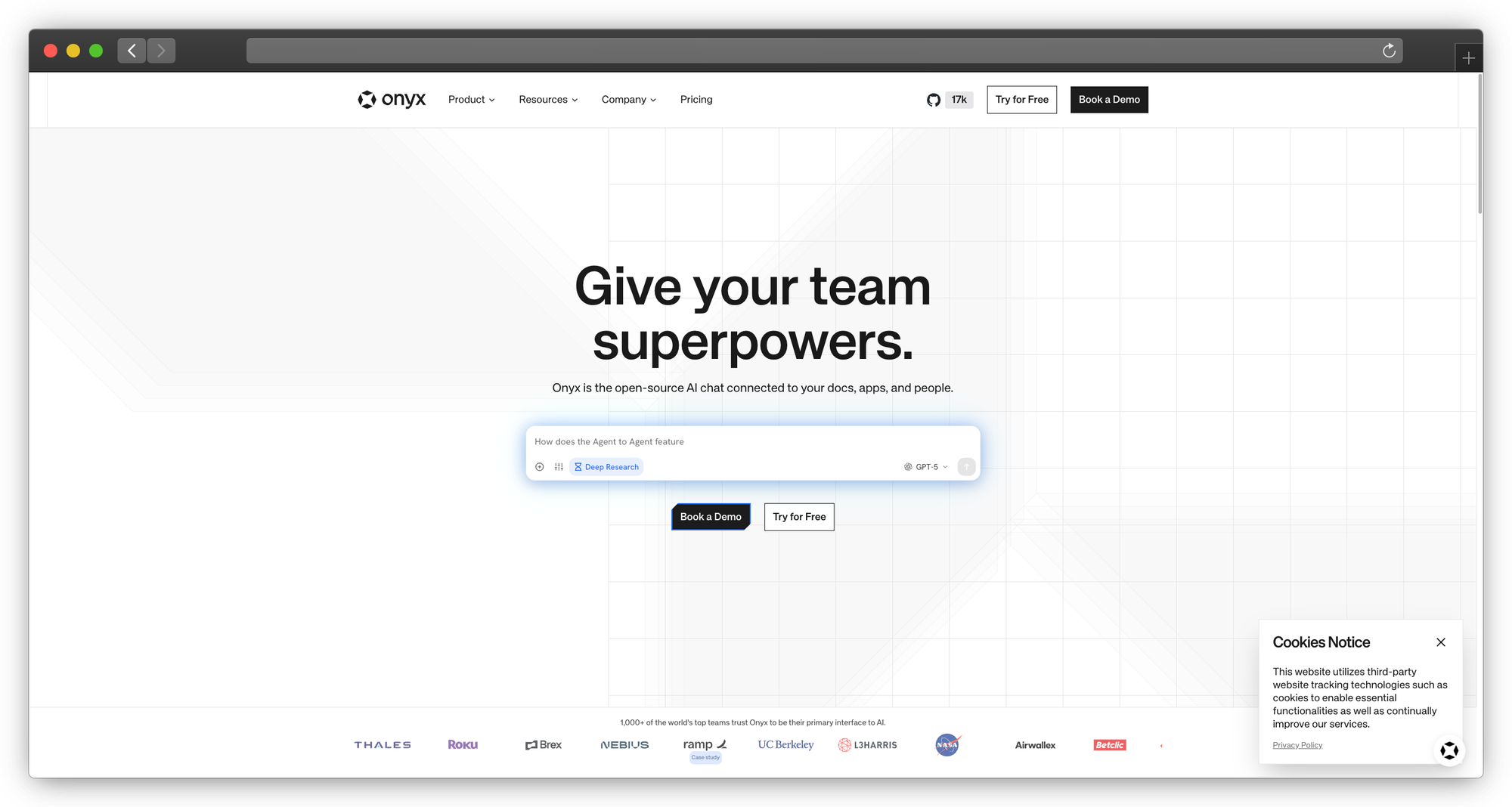
Best Glean alternative for self-hosted enterprise search
Onyx is the open-source answer to Glean. MIT-licensed, self-hostable, and used by Netflix, Ramp, and Thales Group in production. You can deploy it on a laptop in 30 minutes or scale to production infrastructure.
What makes it different:
Onyx connects to 40+ enterprise data sources including Slack, Google Drive, Confluence, Salesforce, and GitHub. It syncs permissions automatically so users only see what they have access to. The chat interface connects to any LLM you choose, including self-hosted models for fully air-gapped deployments.
Key capabilities:
- Natural language search across all connected sources
- AI assistant with citations and source links
- Custom AI agents with unique prompts and knowledge sets
- Deep research mode for complex questions
- Permission-aware results that respect source system access controls
Deployment: Docker Compose for simple deployments, Kubernetes for production scale. Since you own the infrastructure, your data never leaves your environment.
Pricing: Community Edition is free under MIT license. Enterprise Edition (SSO, advanced security) starts around $16/user monthly with cloud options available.
When to choose Onyx:
- Organizations that need complete data control
- Teams with internal infrastructure capacity
- Privacy-first deployments in regulated industries
- Companies wanting Glean-like functionality at a fraction of the cost
For teams building on Onyx who want to fine-tune models on their enterprise data, the platform integrates with external model providers.
2. Prem AI
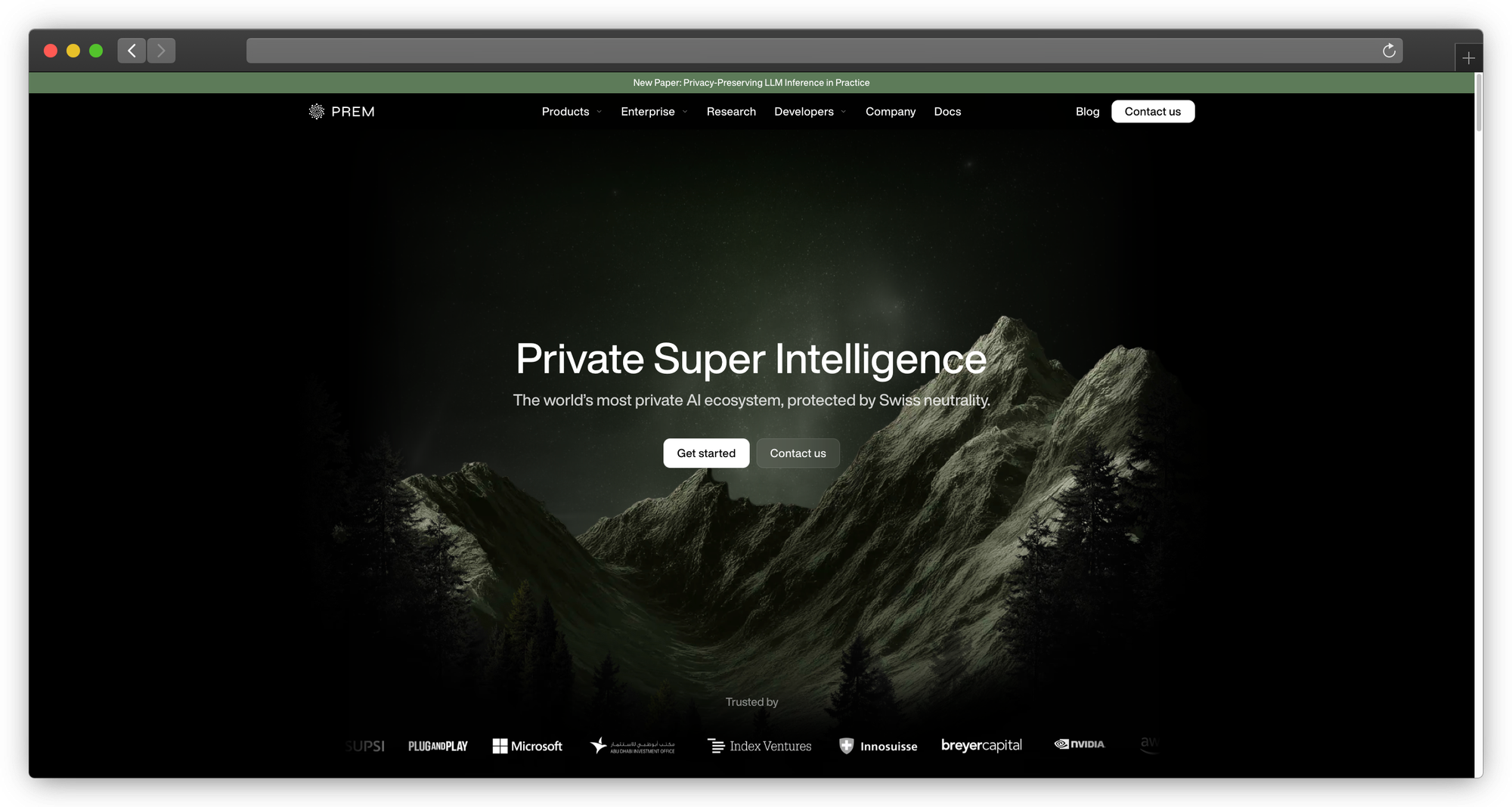
Best Glean alternative for custom model training with enterprise compliance
Most enterprise search tools query documents using generic models. That works for simple questions. It fails when your data contains industry terminology, internal acronyms, or domain-specific concepts that off-the-shelf models don't understand.
Prem AI takes a different approach: train custom models on your actual data, then deploy them privately.
Why fine-tuning beats RAG-only approaches:
Standard enterprise search uses RAG (retrieval-augmented generation) to find relevant chunks and generate answers. The quality ceiling is the embedding model's understanding of your domain. Finance terminology, medical concepts, legal jargon, or proprietary product names often get misunderstood.
Fine-tuning your own embedding and generation models on internal documents breaks through that ceiling. A model trained on your compliance documentation answers compliance questions better than a generic model with perfect retrieval.
Platform capabilities:
- Dataset automation: Upload documents. The platform handles parsing, chunking, and training data preparation. Supports JSONL, PDF, DOCX, TXT with automatic PII redaction.
- Fine-tuning: Train custom models from 30+ base architectures including Llama, Mistral, Qwen, and Gemma. LoRA and full fine-tuning options. No ML engineering required.
- Evaluation: Test retrieval quality and answer accuracy before deployment. LLM-as-a-judge scoring and side-by-side model comparisons.
- Deployment: Self-hosted, AWS VPC, or air-gapped options.
Compliance certifications:
- SOC 2 Type II (annual third-party audits)
- HIPAA compliant with BAA available
- GDPR compliant with data residency controls
- Swiss jurisdiction under Federal Act on Data Protection (FADP)
- Cryptographic verification for every model interaction
- Zero data retention architecture
Production results: Grand (Advisense subsidiary serving 700 financial institutions) uses Prem AI for compliance automation. Sellix achieved 80%+ accuracy improvement in fraud detection. The platform processes 10M+ documents securely across 15+ enterprise clients.
Pricing: Usage-based through AWS Marketplace. No minimum seat counts. Custom enterprise agreements available.
When to choose Prem AI:
- Teams needing custom models trained on proprietary documents
- Regulated industries requiring compliance certifications
- Organizations wanting fine-tuned embeddings for better retrieval
- Companies that want managed infrastructure without building ML teams
3. Guru
Best Glean alternative for verified knowledge management
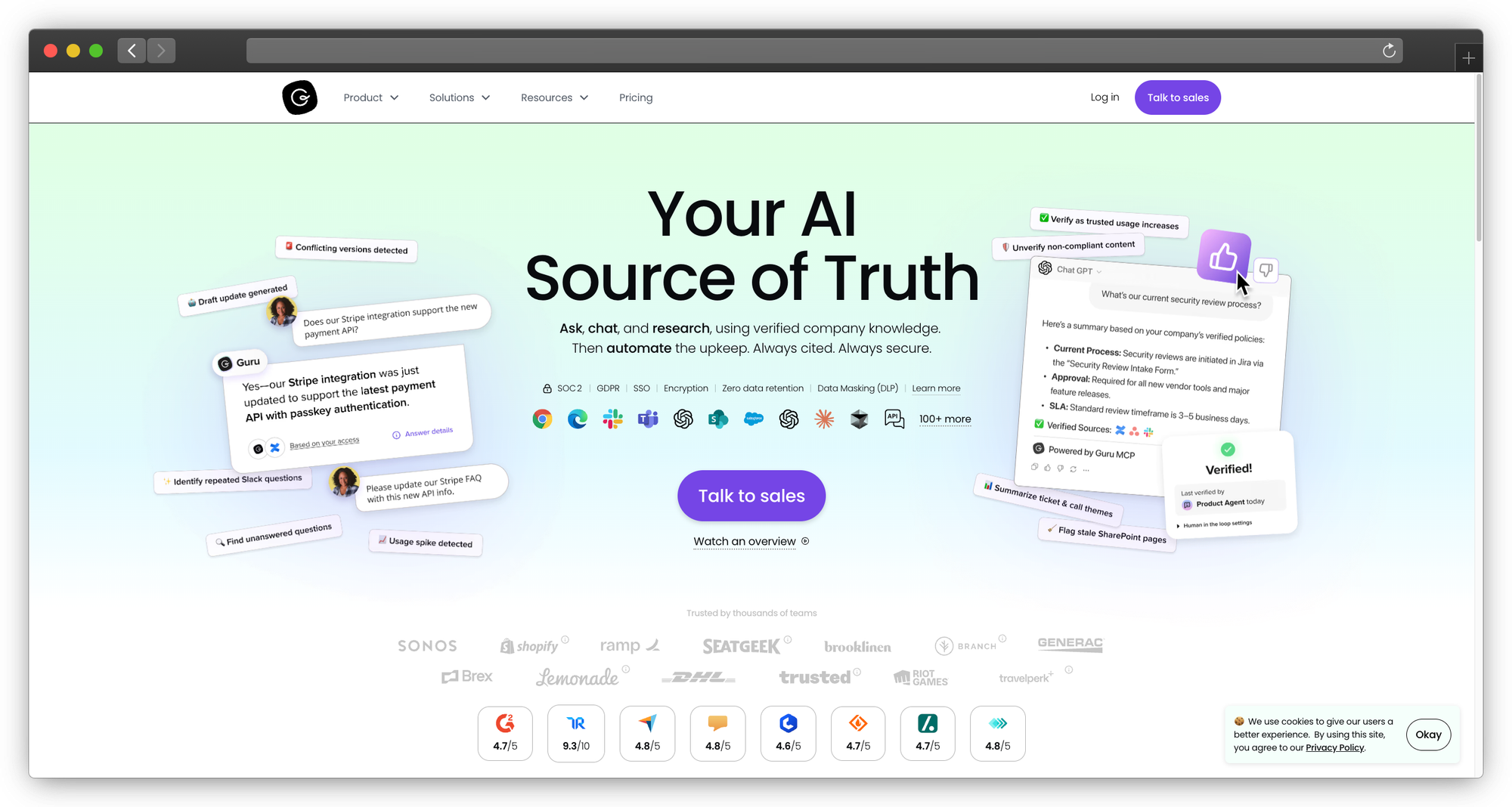
Guru combines enterprise search with a verified wiki. The differentiator: knowledge verification workflows that ensure AI answers come from expert-approved content.
Verification model:
Every piece of knowledge in Guru has an owner, an expiration date, and a review schedule. When information becomes stale, owners get notified. This creates a system where AI-generated answers are grounded in content that humans have explicitly validated.
Key features:
- AI search across connected apps with citations
- Browser extension for in-context knowledge delivery
- Slack and Microsoft Teams integration
- Knowledge Cards with verification status
- Custom AI agents for department-specific use cases
Pricing: All-in-one plan around $25/user monthly. Credit-based system for AI features means you pay for actual usage rather than seat counts.
When to choose Guru:
- Organizations prioritizing content accuracy over broad discovery
- Teams that need governance workflows for knowledge management
- Companies where "verified truth" matters more than search breadth
4. Microsoft 365 Copilot
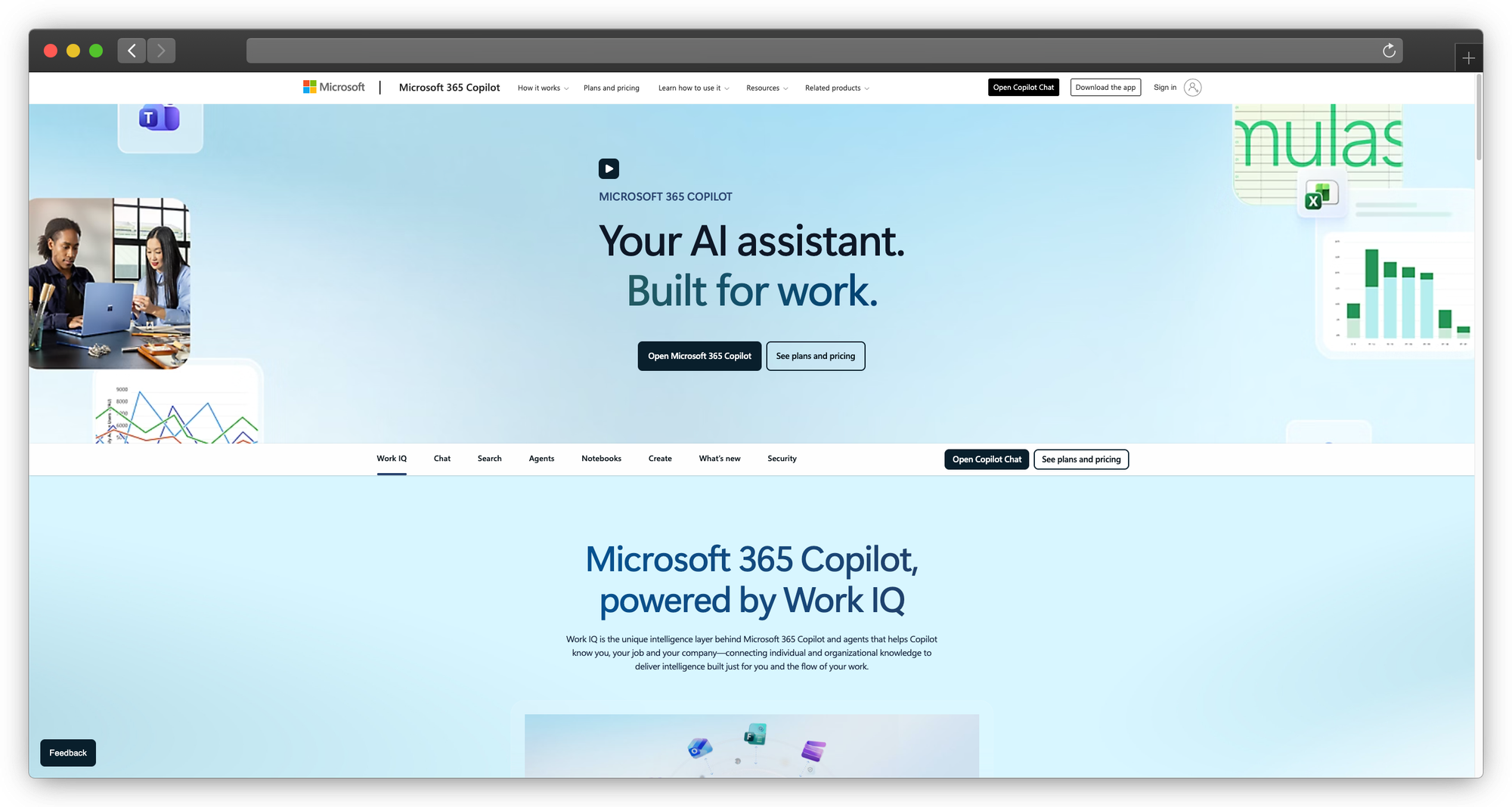
Best Glean alternative for Microsoft-first organizations
If your company runs on Microsoft 365, Copilot is the path of least resistance. It grounds AI responses in the Microsoft Graph: emails, documents, calendars, chats, and other signals already flowing through your environment.
What it does well:
Copilot embeds directly into Word, Excel, PowerPoint, Outlook, and Teams. It uses existing permissions and security policies. There's no separate index to manage or sync. For organizations with 90%+ of knowledge in Microsoft tools, this eliminates integration complexity.
Limitations:
Cross-platform search for content in Jira, Confluence, or Salesforce requires Graph connectors that are more complex than native integrations. If your knowledge lives across multiple ecosystems, Copilot won't be a complete solution.
Pricing: $30/user monthly add-on for eligible Business and Enterprise plans.
When to choose Copilot:
- Organizations standardized on Microsoft 365
- Teams with good SharePoint governance already in place
- Companies prioritizing compliance and data residency in a single boundary
5. GoSearch
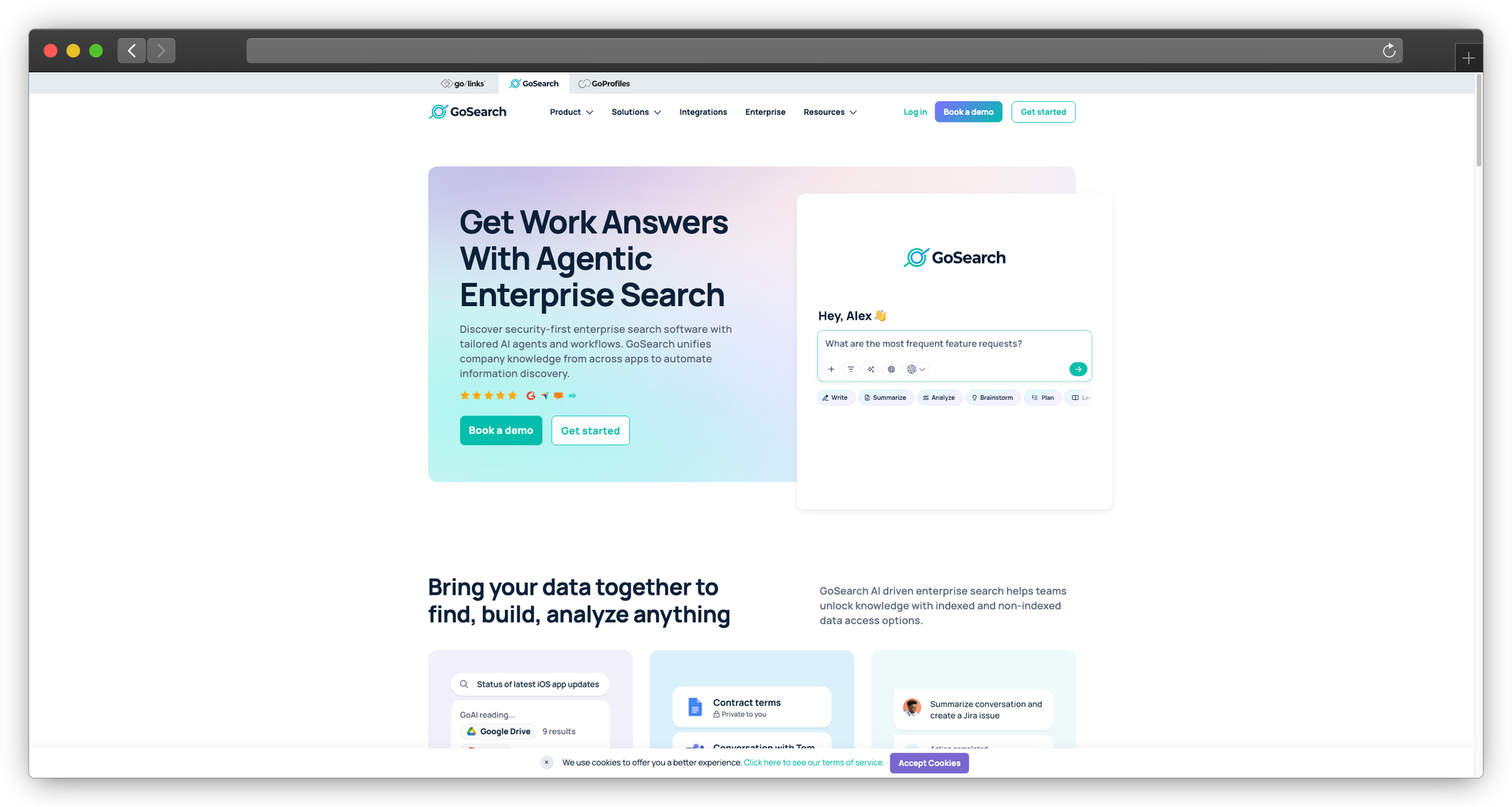
Best Glean alternative for transparent pricing
GoSearch positions itself as the budget-friendly Glean competitor with public pricing and a free tier. It offers AI search, chat, and agents across 100+ workplace apps.
Key differentiator:
GoSearch uses a federated search model that queries sources in real-time rather than indexing all data centrally. This reduces infrastructure overhead and security scope compared to full-index approaches like Glean.
Pricing: Free tier available. Paid plans with transparent per-user pricing. Reports suggest total cost of ownership runs 60-70% lower than Glean for comparable deployments.
When to choose GoSearch:
- Budget-conscious organizations wanting Glean-like features
- Teams that need a free pilot before committing
- Companies frustrated with opaque enterprise pricing
6. Notion AI
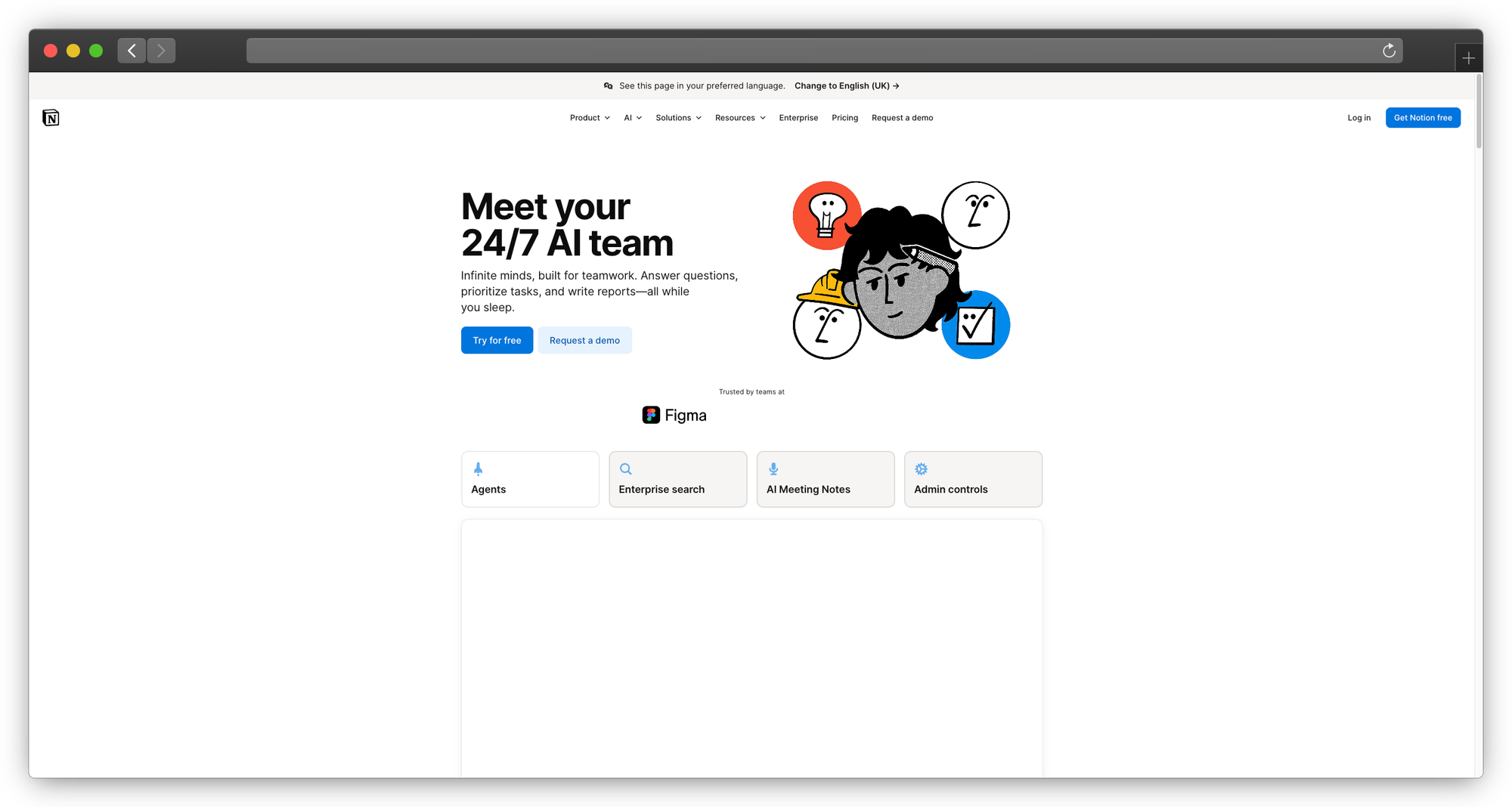
Best Glean alternative for Notion-first teams
Notion AI embeds search and AI capabilities directly into the Notion workspace. For teams that already run projects, wikis, and documentation in Notion, this adds AI without switching tools.
2026 capabilities:
Notion's Enterprise Search now supports external connectors. On Business and Enterprise tiers, Notion AI surfaces results from Slack, GitHub, and Google Drive directly within the Notion interface.
Limitations:
Optimized primarily for content inside Notion. External connectors are functional but not as deep as dedicated enterprise search platforms.
Pricing: $10/user monthly add-on to existing Notion plans.
When to choose Notion AI:
- Teams already running on Notion for documentation and wikis
- Organizations wanting AI capabilities without new tool adoption
- Smaller teams where Notion is the primary knowledge repository
7. Slack AI
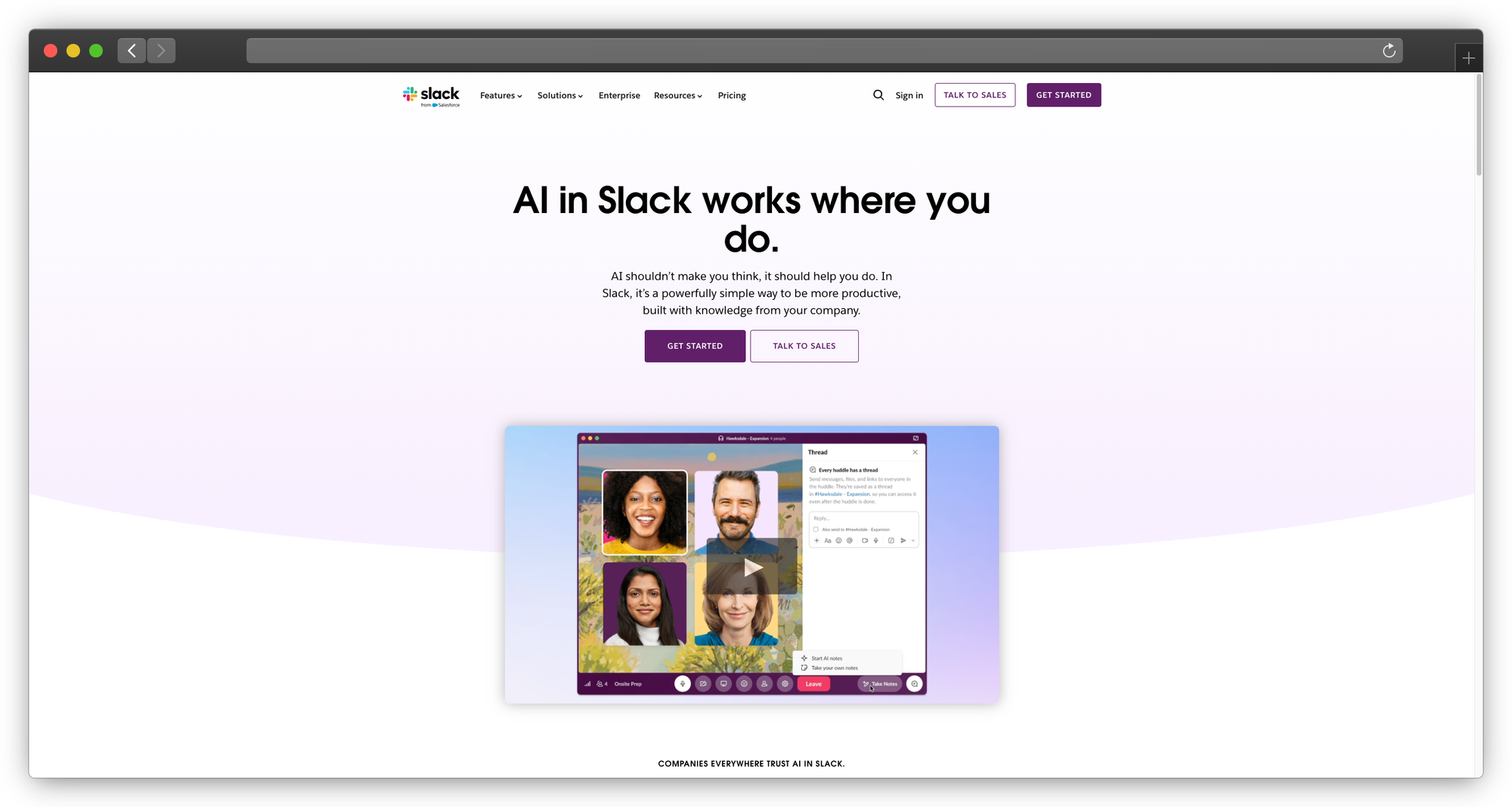
Best Glean alternative for communication-heavy organizations
Slack AI brings enterprise search directly into the communication layer. It searches messages, channels, canvases, and connected apps to surface answers where conversations happen.
Key features:
- Channel recaps summarizing what you missed
- Thread summaries for long discussions
- Search answers that synthesize across conversations
- Huddle notes generated automatically
Limitations:
Slack AI is optimized for Slack-native content. It respects existing security and compliance controls but doesn't replace broader enterprise search across document repositories.
Pricing: Bundled with Slack Business+ and Enterprise Grid plans.
When to choose Slack AI:
- Organizations where most knowledge flows through Slack
- Teams wanting AI without separate tool adoption
- Companies focused on conversation search over document search
8. Elastic Enterprise Search
Best Glean alternative for technical teams
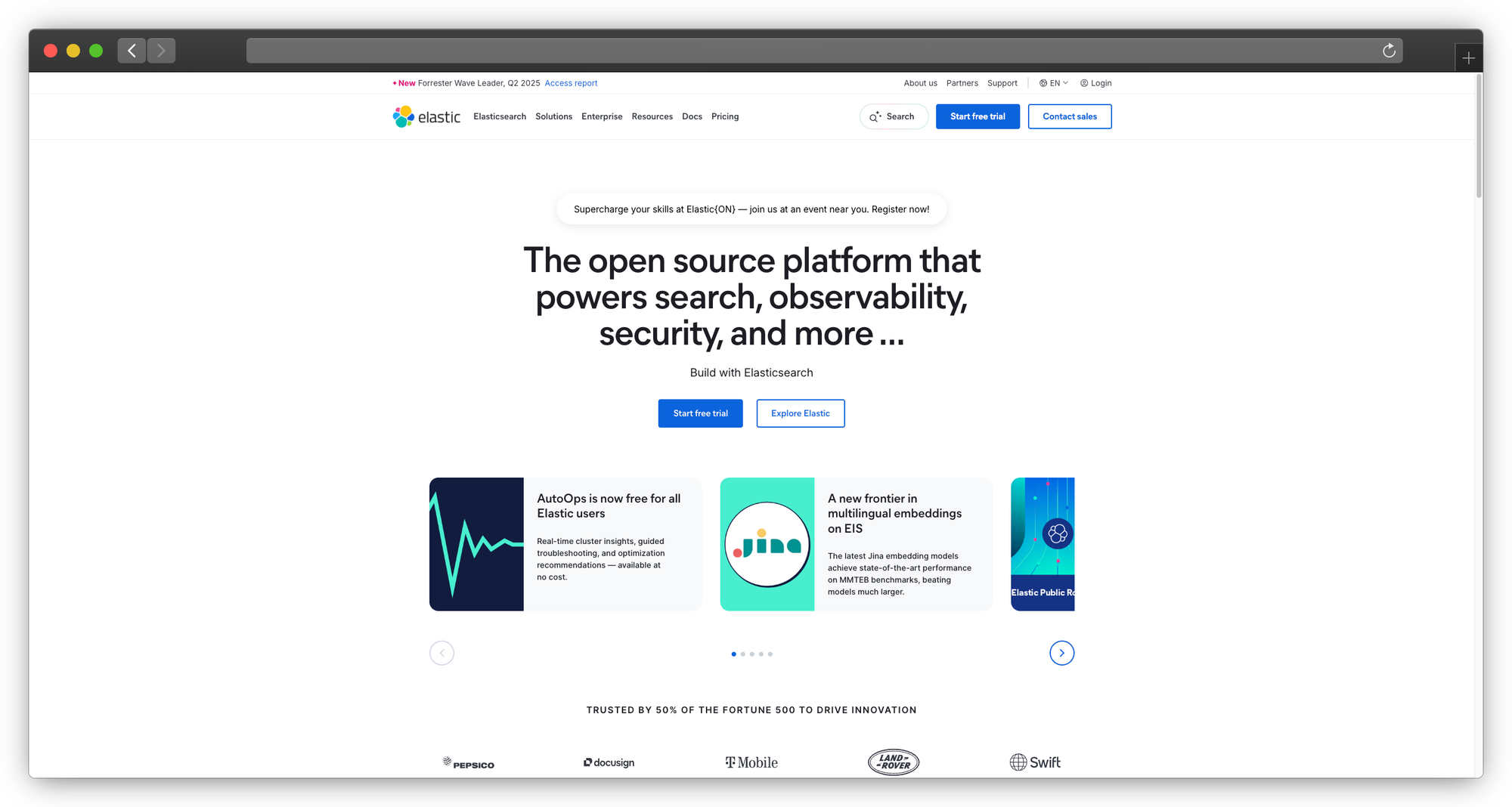
Elastic offers the open-source Elasticsearch engine with enterprise features layered on top. For organizations with engineering capacity, it provides maximum customization and control.
Why technical teams choose Elastic:
- Open-source core with flexible deployment options
- Advanced query customization and relevance tuning
- On-premises or cloud deployment
- Integration with existing Elastic observability stack
Tradeoffs:
Elastic requires engineering investment to configure and maintain. It's a search engine, not a turnkey enterprise AI product. Teams need to build the AI layer themselves or integrate with external LLMs.
Pricing: Open-source free tier. Enterprise features via subscription.
When to choose Elastic:
- Organizations with existing Elasticsearch infrastructure
- Technical teams comfortable building search experiences
- Companies needing maximum customization and control
9. Coveo
Best Glean alternative for customer-facing search
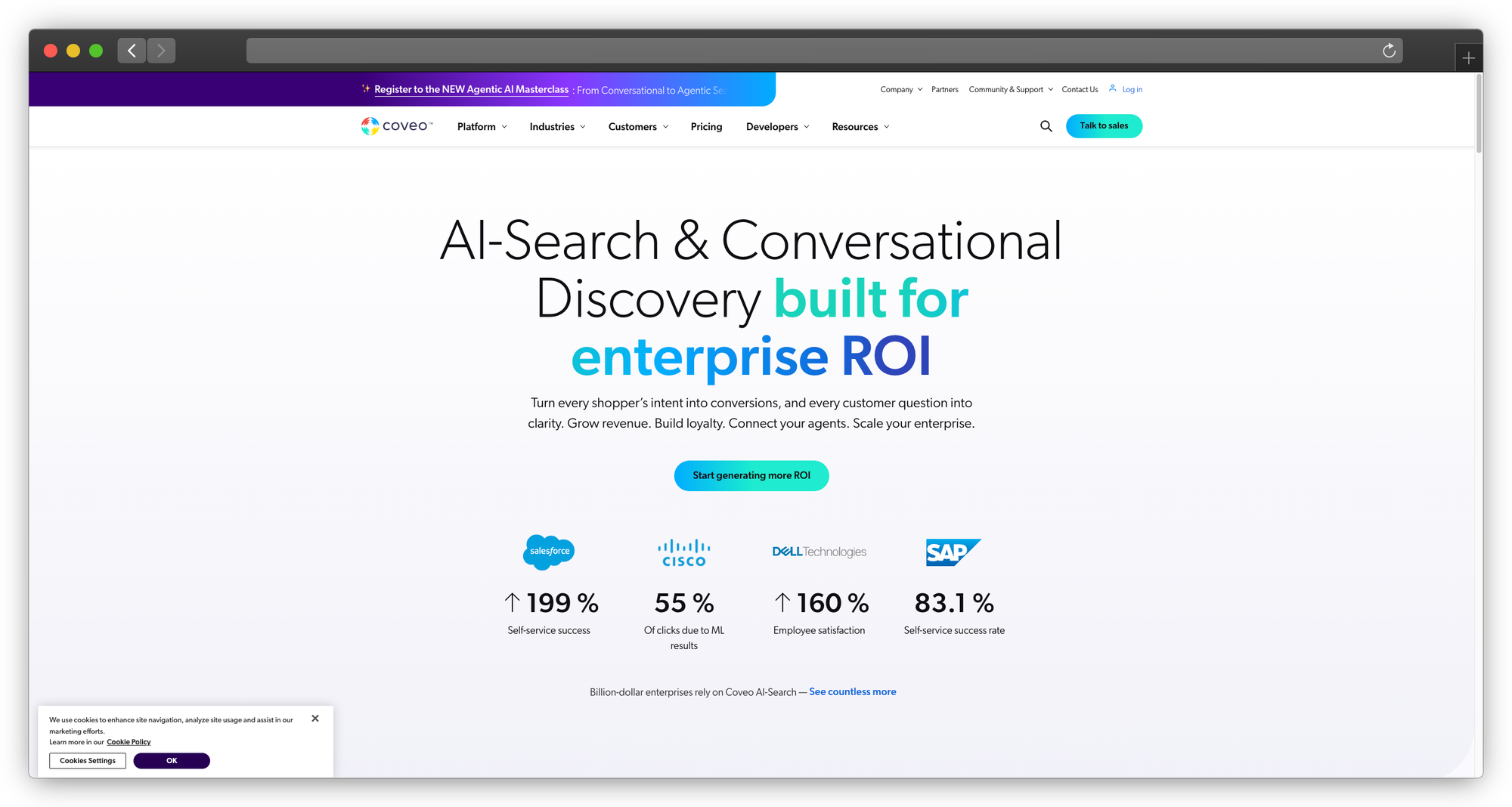
Coveo specializes in search experiences for customer support, e-commerce, and external knowledge bases. While it handles internal search, its strength is customer-facing applications.
Key differentiators:
- Predictive recommendations based on user behavior
- A/B testing for search relevance optimization
- Support case deflection analytics
- E-commerce product discovery
Pricing: Custom quotes based on usage and deployment complexity. Positioned at the higher end of the market.
When to choose Coveo:
- Organizations prioritizing customer-facing search experiences
- E-commerce companies needing product discovery
- Support teams focused on case deflection
10. Algolia
Best Glean alternative for developer-driven search
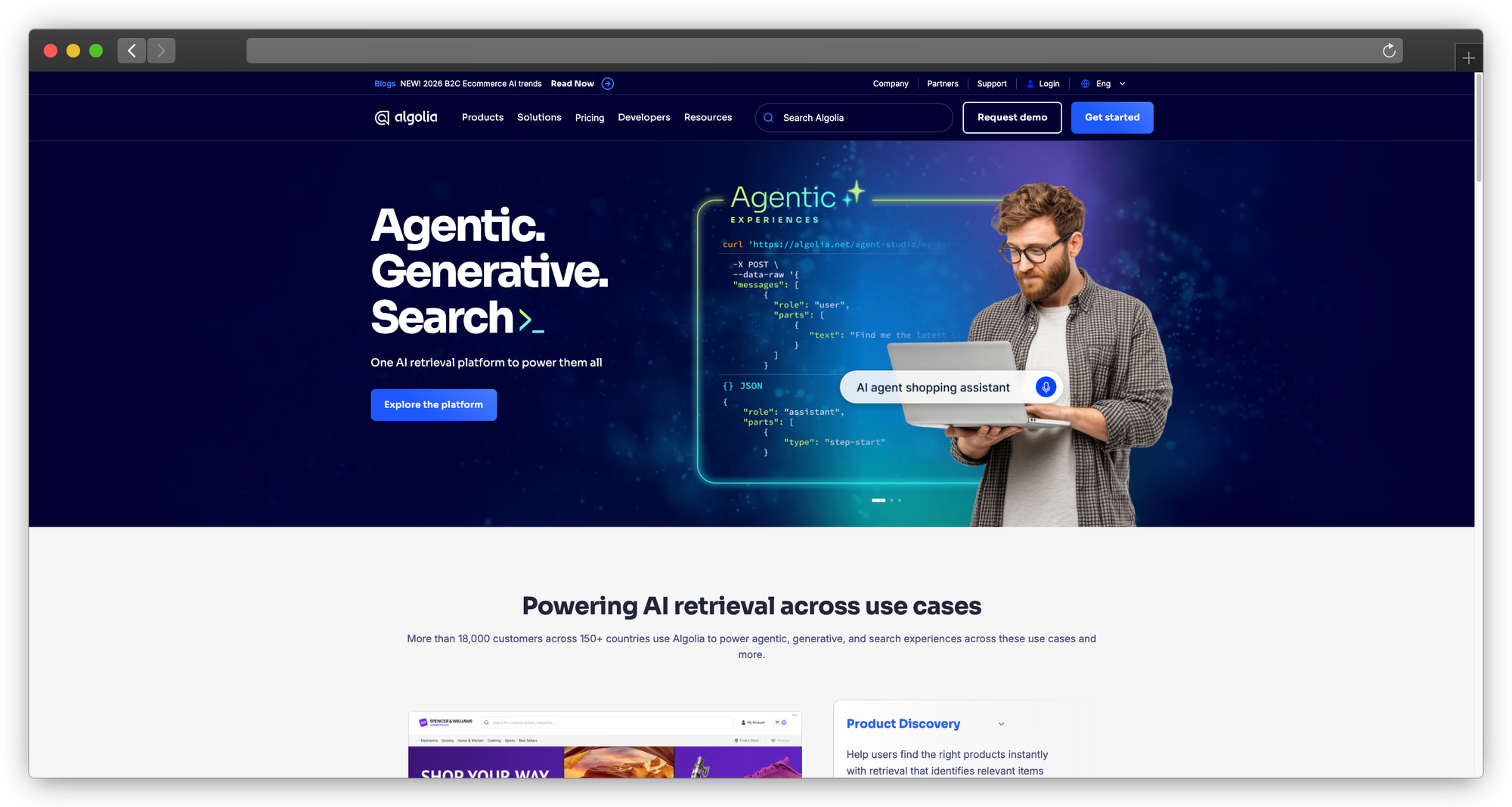
Algolia provides search-as-a-service APIs. Developers build custom search experiences on top of Algolia's infrastructure. Speed and customization are the primary value propositions.
Technical strengths:
- Sub-50ms search responses
- Typo tolerance and natural language processing
- Real-time indexing
- Extensive API and SDK support
Limitations:
Algolia is infrastructure, not a complete enterprise search product. Building Glean-like functionality requires significant development work.
Pricing: Starts at $1.50 per 1,000 search requests. Usage-based scaling.
When to choose Algolia:
- Development teams building custom search experiences
- Organizations needing search APIs rather than turnkey products
- Companies with engineering resources to build on infrastructure
11. ChatGPT Enterprise
Best Glean alternative for general AI with enterprise connectors
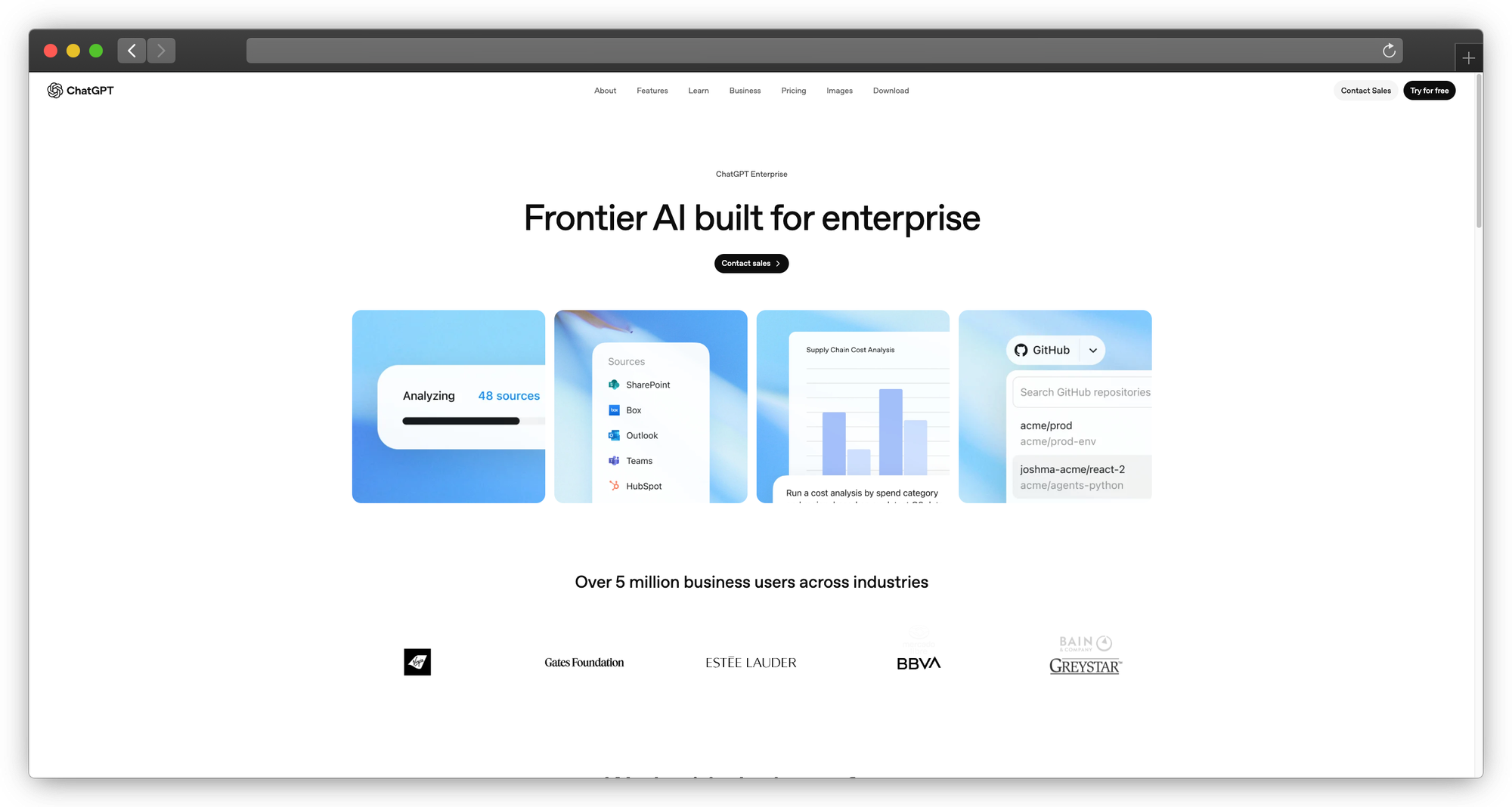
ChatGPT Enterprise combines OpenAI's models with enterprise security and 50+ connectors including Google Drive, Slack, GitHub, HubSpot, and Salesforce.
Strengths:
- Brand recognition and familiarity (most employees know ChatGPT)
- Strong general AI capabilities beyond search
- Rapid feature development from OpenAI
- Custom GPTs for department-specific workflows
Limitations:
ChatGPT Enterprise excels at general AI tasks but isn't purpose-built for enterprise search. Retrieval across internal knowledge is improving but not as mature as dedicated search platforms.
Pricing: Custom enterprise agreements. Higher price point than single-purpose search tools.
When to choose ChatGPT Enterprise:
- Organizations wanting general AI capabilities plus search
- Teams that value OpenAI's model capabilities
- Companies willing to pay premium for brand and breadth
12. Dust
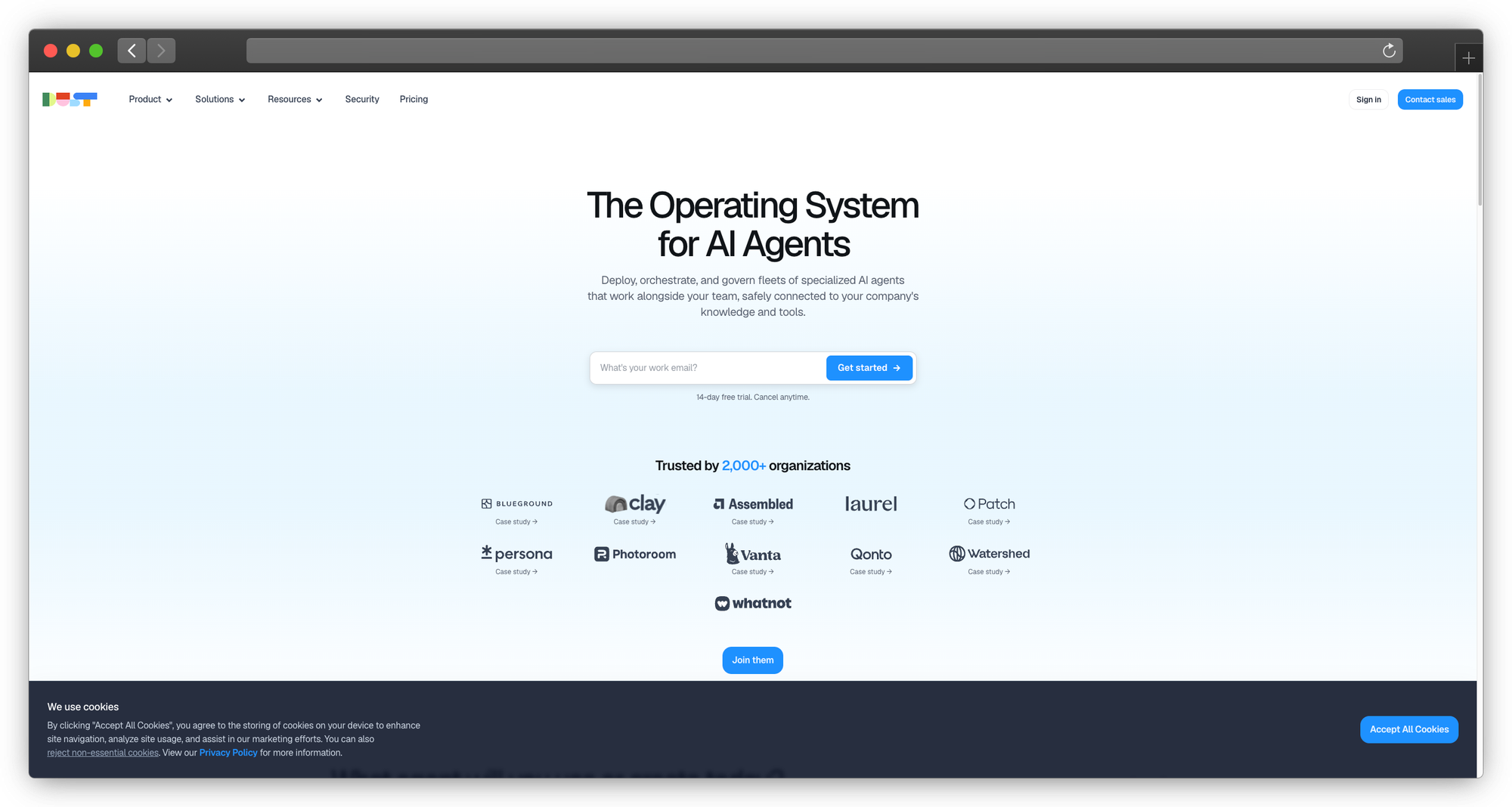
Best Glean alternative for AI agents and workflow automation
Dust goes beyond search to action. While other platforms stop at finding information, Dust helps complete the work that information enables: generating reports, updating systems, creating content, and automating tasks.
Key differentiator:
Dust positions itself as an AI agent operating system. It doesn't just retrieve documents; it orchestrates multi-step workflows using that retrieved information.
Features:
- Enterprise search across connected apps
- AI agents that take actions based on discoveries
- Custom agent building without code
- Deep integrations with business tools
Pricing: Usage-based with enterprise options.
When to choose Dust:
- Organizations wanting AI that executes, not just retrieves
- Teams ready for agentic workflows
- Companies where search is step one, not the destination
Self-Hosted Options: Control vs. Complexity
For organizations that cannot send data to third-party platforms, self-hosted solutions provide maximum control with additional operational burden.
Build vs. buy tradeoffs:
| Approach | Pros | Cons |
|---|---|---|
| Onyx (Danswer) | Production-ready, MIT license, 40+ connectors | Requires infrastructure team |
| Elastic + custom AI | Maximum flexibility, open-source core | Significant engineering investment |
| DIY with LangChain | Complete control, model flexibility | Build everything from scratch |
| Prem AI (self-hosted) | Managed fine-tuning, compliance certs, export models | Commercial licensing |
For teams that want self-hosted deployment with enterprise compliance, the choice depends on internal engineering capacity and compliance requirements.
Decision Framework
By primary constraint:
| If You Need... | Choose | Why |
|---|---|---|
| Lowest cost | Onyx (free tier) or GoSearch | No minimum contracts |
| Transparent pricing | GoSearch, Guru, Notion AI | Public pricing pages |
| Complete data control | Onyx, Elastic, Prem AI (self-hosted) | Self-hosted options |
| Fastest deployment | Onyx (30 min), Slack AI, Notion AI | Embedded or simple setup |
| Microsoft integration | Microsoft 365 Copilot | Native Graph integration |
| Custom model training | Prem AI | Fine-tuning with compliance |
| Verified knowledge | Guru | Governance workflows |
| Customer-facing search | Coveo, Algolia | Specialized for external use |
| Workflow automation | Dust | Agent-first architecture |
By organization size:
| Size | Recommended | Why |
|---|---|---|
| Startups (<50 people) | Notion AI, Slack AI | Already embedded in tools you use |
| Mid-market (50-500) | GoSearch, Guru, Onyx | Better pricing than Glean |
| Enterprise (500+) | Glean, Prem AI, Microsoft Copilot | Scale and compliance features |
| Regulated industries | Prem AI, Onyx (self-hosted), Elastic | Compliance and data control |
Implementation Considerations
Connector coverage matters. Map your knowledge sources before selecting a platform. If 80% of your knowledge lives in three tools, choose a platform that integrates deeply with those three rather than superficially with 100.
Permissions inheritance is complex. Enterprise search tools promise to respect source system permissions. In practice, permission mapping across dozens of systems creates edge cases. Audit thoroughly before deployment.
Search quality requires tuning. Out-of-box search quality varies significantly. Plan for relevance tuning, feedback collection, and ongoing optimization.
AI accuracy depends on content quality. AI-generated answers are only as good as the underlying content. Garbage in, garbage out. Clean up knowledge bases before deploying AI search.
For organizations planning to evaluate AI models before deployment, testing frameworks help catch quality issues early.
Conclusion
Glean built a strong product at enterprise scale. The $7.2 billion valuation reflects real value delivered to large organizations. But the pricing model, minimum contracts, and data handling approach don't fit every organization.
The alternatives here address different gaps:
- Onyx for self-hosted Glean functionality at zero cost
- Prem AI for custom models with enterprise compliance
- Guru for verified knowledge management
- Microsoft Copilot for Microsoft-native organizations
- GoSearch for transparent, affordable enterprise search
- Notion AI and Slack AI for ecosystem-native AI
- Dust for workflow automation beyond search
The right choice depends on your constraints: budget, data control requirements, existing tooling, and internal technical capacity. Start with the problem you need to solve, then find the architecture that fits.
What to Read Next
If you're evaluating deployment options:
- Self-Hosted LLM Guide - Infrastructure, tools, and cost breakdown
- Cloud vs Self-Hosted AI - Decision framework for enterprise
If you're building knowledge AI:
- RAG Strategies - Retrieval approaches for document AI
- Advanced RAG Methods - Simple, hybrid, agentic, and graph RAG
If you're exploring model options:
- Open-Source Models Comparison - DeepSeek, Llama, Qwen for enterprise
Fine-Tuning Guide - Custom models for your domain